
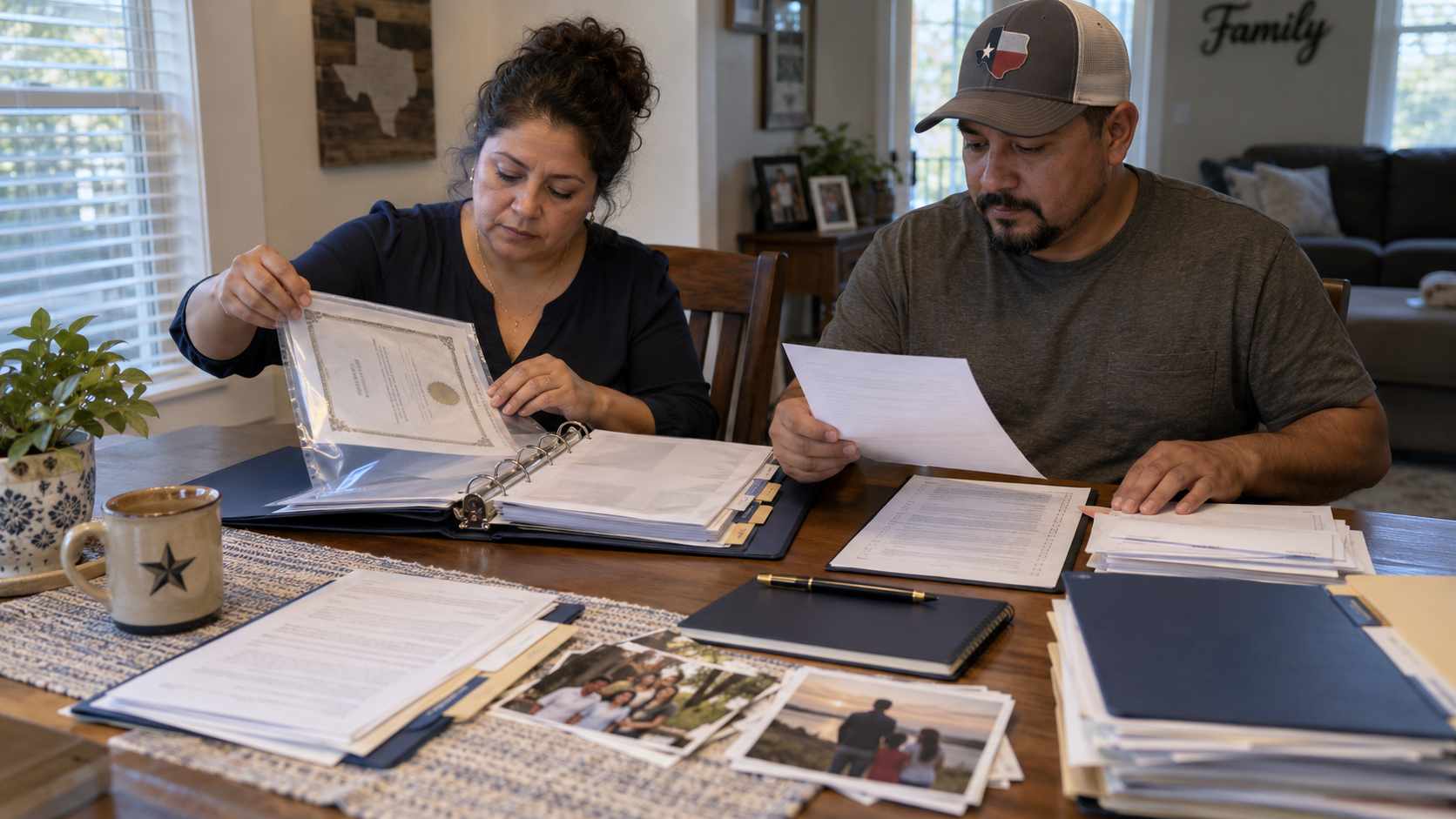

When a loved one approaches parole review, families often hear that they need to prepare a Texas parole packet. That phrase can make the process seem more complicated—or more certain—than it really is.
The Texas Board of Pardons and Paroles does not require an incarcerated person to submit a document formally called a parole packet. There is no mandatory packet format, and having a large or expensive packet does not guarantee parole approval.
A parole packet is simply an organized collection of information submitted in support of an incarcerated person’s release. When prepared responsibly, it can help the parole panel understand the person’s progress, available support and proposed plan for returning to the community.
Families may prepare and submit this information themselves. They may also consult a qualified Texas parole attorney when a case is complicated or they need help deciding what information is relevant.
Is a parole packet required in Texas?
No. The Board’s official guidance states that an incarcerated person does not need a parole packet to receive a favorable vote. It also says that support information may be submitted without using a specific format and without hiring an attorney.
The value of a Texas parole packet is therefore not its name, length, binding or appearance. Its value comes from presenting truthful, relevant and verifiable information in a format that is easy to review.
A strong submission should help answer practical questions such as:
- Where will the person live?
- How will the person support themselves?
- Who will provide transportation and assistance?
- What treatment or counseling will be available?
- What has the person accomplished while incarcerated?
- How does the release plan address risks identified in the case?
- What responsible support will exist after release?
The Board’s official parole-packet guidance confirms that a packet is optional, while its submission guidance explains that no specific format is required.
Basic identifying information
Every submission should clearly identify the incarcerated person. At minimum, include:
- Full legal name
- TDCJ number
- Current unit, if known
- Expected parole-review date or month, if known
- Cause number or county of conviction when relevant
- Contact information for the family member, attorney or other person submitting the material
The person’s full name and TDCJ number should also appear on individual support letters and important attachments. This reduces the risk of information being associated with the wrong file.
A short cover page or cover letter can identify the person and briefly list the materials included in the submission.
A concise case introduction
The opening should explain the purpose of the submission without exaggerating the facts or attempting to retry the criminal case.
A useful introduction may briefly address:
- The sentence and time served
- The approaching parole review
- The individual’s acceptance of responsibility
- Significant evidence of rehabilitation
- The central features of the release plan
- The family or community support available after release
The introduction should remain concise. It is not necessary to repeat every fact that appears elsewhere in the packet.
Families should be especially careful when discussing the underlying offense. A submission should not minimize the harm, blame the victim or make unsupported claims about innocence. If the conviction or record presents a complicated legal issue, the family should consider speaking with a Texas parole lawyer before addressing it.
A personal statement from the incarcerated person
A personal statement can give the incarcerated person an opportunity to explain their growth, insight and plans.
A meaningful statement may discuss:
- Acceptance of responsibility
- Understanding of the harm caused
- Personal changes made during incarceration
- Lessons learned through education, counseling or treatment
- Strategies for avoiding previous behavior
- Plans for employment, housing and continued rehabilitation
- Realistic goals after release
The statement should sound like the individual who wrote it. A highly polished statement that contains vague promises but little personal insight may be less useful than an honest and specific explanation.
Expressions of remorse should be sincere and consistent with the facts of the case. Families should not pressure an incarcerated person to make statements that are untrue.
Institutional conduct and accomplishments
The packet may summarize the person’s behavior and constructive activities while incarcerated.
Relevant information can include:
- Educational courses
- Vocational training
- Work assignments
- Treatment programs
- Substance-use programs
- Cognitive or behavioral programs
- Religious or volunteer activities
- Mentoring or leadership responsibilities
- Disciplinary improvement
- Certificates and documented achievements
Certificates may be included when they add useful verification. However, the Board generally receives information about institutional conduct and completed programs through the official case-summary process. Families do not need to overwhelm the file with repetitive documents.
A list of completed programs should be accurate. Do not describe enrollment as completion or claim participation that cannot be verified.
A specific housing plan
A stable residence is one of the most important practical parts of a release plan.
The housing section should identify:
- The proposed address
- The name and relationship of the person providing housing
- How long the residence will be available
- Who else lives in the home
- Whether the homeowner or leaseholder approves
- Available transportation
- Any restrictions that could affect the placement
A signed housing letter can confirm that the person is genuinely welcome at the proposed residence.
Families should not promise housing without speaking to the homeowner or leaseholder. They should also consider whether the location is compatible with anticipated supervision requirements, protective orders, victim-related restrictions or special conditions.
Approval of parole does not necessarily mean that every proposed address will be accepted. The home plan may require investigation before release.
Employment and financial stability
A parole packet does not always need to contain a guaranteed job offer. However, it should present a realistic plan for lawful financial support.
Useful employment information may include:
- A written job offer
- A letter from a prospective employer
- The type and location of the work
- Expected hours and pay
- Transportation to the job
- Relevant skills or certifications
- A plan for applying for work if no job is confirmed
- Temporary financial assistance from family
An employment letter should come from someone who is genuinely authorized to offer or discuss the position. Families should not submit invented offers or vague promises made solely to improve the packet.
If disability, age or medical limitations affect employment, the release plan can explain the individual’s lawful source of support and access to appropriate services.
Treatment, counseling and recovery support
When substance use, mental health, anger, trauma or other behavioral concerns are relevant, the packet should explain how those needs will be addressed in the community.
The plan may identify:
- Substance-use treatment
- Recovery meetings
- Mental-health care
- Medication management
- Anger-management counseling
- Sex-offense treatment, when required
- Faith-based or peer support
- Medical providers
- Transportation to appointments
Whenever possible, include the provider’s name, location and contact information. A verified appointment or acceptance letter is stronger than a general statement that the person will “get counseling.”
The proposed services should match the person’s documented needs and anticipated supervision conditions.
Transportation and identification
Transportation problems can quickly interfere with employment, treatment and parole reporting.
The submission may explain:
- Who will provide transportation after release
- How the person will report to parole
- How they will reach work or treatment
- Whether public transportation is available
- How identification documents will be obtained
- Who will help with clothing, food, a telephone and other immediate needs
These details may appear ordinary, but they help demonstrate that the plan has been considered carefully.
Parole support letters
Support letters should provide specific information rather than repeating identical praise.
Appropriate writers may include:
- Close family members
- The proposed housing provider
- A prospective employer
- A counselor or treatment provider
- A pastor or faith leader
- A mentor
- A teacher or program leader
- A responsible community member
- A person who can describe meaningful personal growth
A support letter can explain how the writer knows the incarcerated person, what changes the writer has observed, what support is actually being offered and why the release plan is realistic.
The Board advises that a few clear, concise letters are preferable to excessive petitions or repetitive submissions. Each letter should include the incarcerated person’s full name and TDCJ number. See the Board’s official support-letter guidance.
Addressing previous parole denials
If the person has previously been denied parole, the packet may explain what has changed since that decision.
This can include:
- Additional time without serious disciplinary cases
- Completion of relevant programs
- Improved insight or accountability
- A stronger housing plan
- Verified employment
- New treatment arrangements
- More appropriate community support
The submission should not claim that completing a program automatically resolves a denial reason. Instead, it should explain how the documented change relates to the concerns identified in the previous vote.
A Texas parole attorney may be useful when denial reasons are broad, the case history is complicated or the family is unsure how to address unfavorable information accurately.
What should be left out?
A parole packet can become less effective when it contains excessive, irrelevant or unreliable material.
Families should generally avoid:
- False or exaggerated claims
- Attacks against victims, prosecutors, judges or Board members
- Repetitive form letters
- Large petitions containing no personal information
- Unverified housing or employment promises
- Irrelevant photographs or certificates
- Claims that programs guarantee rehabilitation
- Lengthy discussions that attempt to relitigate the conviction
- Confidential information that should not be distributed
- Material downloaded from another person’s case
- Guarantees or claims of special influence
The goal is not to create the thickest packet. The goal is to submit the clearest reliable information.
When and where should parole information be submitted?
Texas Board rules generally provide that written information supporting release may be submitted to TDCJ’s Review and Release Processing Section. During the applicable review period, copies may also be submitted to the parole-panel members designated to consider the case.
Because office assignments and submission procedures may change, families should verify the current instructions before sending sensitive or time-dependent documents.
The Parole in Texas handbook and the Board’s current website provide information about the review process and contact procedures.
Families should retain a complete copy of everything submitted, along with confirmation of delivery when available.
Should a family hire a Texas parole attorney to prepare the packet?
An attorney is not required. Many families can gather support letters and release-plan information themselves.
Consulting a Texas parole lawyer may be helpful when:
- The offense or criminal history is complicated
- There have been previous parole denials
- The family expects significant opposition
- Important records appear inaccurate
- The release plan has substantial weaknesses
- Multiple sentences, detainers or holds are involved
- The family is unsure what information is legally or strategically appropriate
- The review period is approaching and the materials remain disorganized
Texas law restricts compensated representation before the Board, a parole panel or the Parole Division to qualified attorneys who meet the applicable licensing and registration requirements. Families should verify those qualifications before paying someone to provide parole representation.
No parole attorney can guarantee approval. The Board retains authority over the decision.
A practical Texas parole-packet checklist
Before submitting the materials, confirm that the packet contains:
- The incarcerated person’s full name and TDCJ number
- A short cover letter or table of contents
- A concise personal statement
- An accurate summary of institutional progress
- A verified housing plan
- Employment or financial-support information
- Transportation arrangements
- Treatment and medical plans when relevant
- A small number of meaningful support letters
- Documentation for important factual claims
- An explanation of improvements since any prior denial
- Current contact information
- Legible, organized pages
- No unsupported promises or repetitive filler
The family should also confirm that the information is consistent. Contradictory addresses, employment plans or descriptions of support can create unnecessary questions.
Final thoughts
A Texas parole packet is not a required form and is not a guarantee of release. It is an optional way to organize relevant information for the parole-review process.
The strongest packet is truthful, concise and practical. It shows what the incarcerated person has done, what support will be available and how the proposed release plan addresses employment, housing, treatment, transportation and public-safety concerns.
Whether the family prepares the information independently or works with a qualified Texas parole attorney, substance matters more than presentation. A professional-looking binder cannot replace accurate documentation, genuine accountability and a realistic plan for success.
This article provides general information about the Texas parole process and is not legal advice. Parole matters are fact-specific. Families seeking advice about an individual case should consult a qualified Texas attorney.